Define the hierarchy before choosing decoration
Decide what the reader should recognize first: the master brand, the fragrance name or the collection. Keep the next level visually distinct. Concentration, volume and other product details must come from the approved product record, not from the designer’s guess or a generated image.
SEREIN is a fictional fragrance concept. Its bottle and carton visuals demonstrate a proposed identity, not a product that has been manufactured, tested or offered for sale. The reference helps explain composition; it cannot verify scent notes, ingredients or performance.
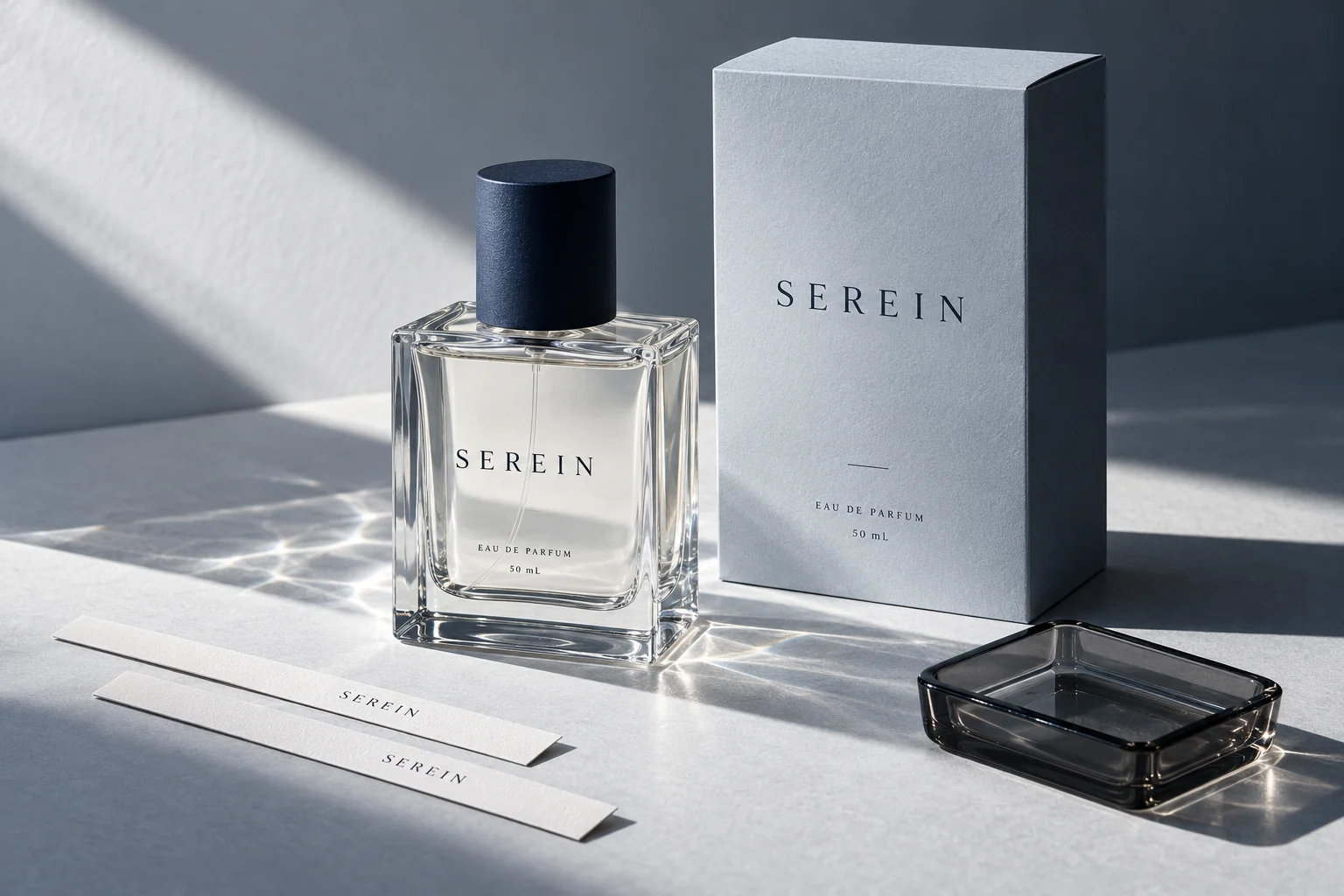
Keep three layers in the system
| Layer | Keep consistent | Change only with an approved source |
|---|---|---|
| Master brand | Signature proportions, core type roles and common spacing | Brand name or approved mark |
| Range and variant | Position of the identifier and the way variants are distinguished | Variant name, assigned color or motif and any documented scent description |
| Product information | A clear area and readable hierarchy | Actual concentration, volume, required wording and other market-specific product facts |
Do not rely on color alone to distinguish variants. Include the name or another readable identifier. A pale color difference that is visible on screen may change with glass, ink, foil or lighting.
Make a bottle and carton proof list
Ask for the supplier’s actual bottle drawing, label area and carton dieline. Record dimensions, curves, folds and any area that should remain clear. Review a physical or supplier-approved proof at the intended size. Check the smallest text and the actual relationship between the bottle and the carton.
Use screen HEX values as a digital reference. Record the supplier’s approved print or material reference separately. A rendered metallic finish does not specify a foil process, and a PDF viewed on a monitor does not establish how a translucent bottle will look in daylight.
Keep the story within the evidence
A mood such as quiet, bright or formal can guide the art direction. Specific claims about ingredients, longevity, safety, origin or environmental impact need the appropriate supporting information. Have the responsible product owner and qualified reviewers confirm product copy and destination-market requirements.
For the fictional SEREIN study, write about visual choices and clearly label the concept. Do not describe it as a tested fragrance or invent customer reactions. The same boundary applies when creating a launch caption from the image.
Carry the identity into the campaign
Build one neutral product-information composition and one more expressive brand composition. The first must show the correct real variant if it is used to sell a product. The second can communicate mood, but should not obscure which parts are conceptual.
Connect the campaign to a page that contains the promised information. Use the five launch-post briefs to separate introduction, detail, use, questions and availability. A concept collection needs an exploration link, not an invented purchase offer.
Deliver a usable package
Include the approved artwork, fonts and rights notes, variant matrix, supplier templates, approved copy and the current proof status. A recipient should be able to tell which files are references and which have been prepared for the actual production process.
Download the fragrance bottle-to-box worksheet
See the SEREIN concept study for its existing resources. Use the brand guidelines template for the common identity rules, then add the product-specific specification supplied by your manufacturer.