The 12-section framework
Cover; brand foundation; audience and promise; wordmark; clear space; color palette; typography; product imagery; social applications; digital applications; voice; handoff. Remove sections that do not apply.
A good template supplies structure without pretending to supply your strategy. Use these 12 sections to document the decisions that make your brand consistent.
Start in the studioWrite the rules another person needs to apply your identity: brand foundation, voice, logo, color, typography, layout, photography and applications. Include actual files, correct and incorrect examples, and release responsibilities. Brandfolia offers a 12-section working draft and a separate 24-section completed-book structure.
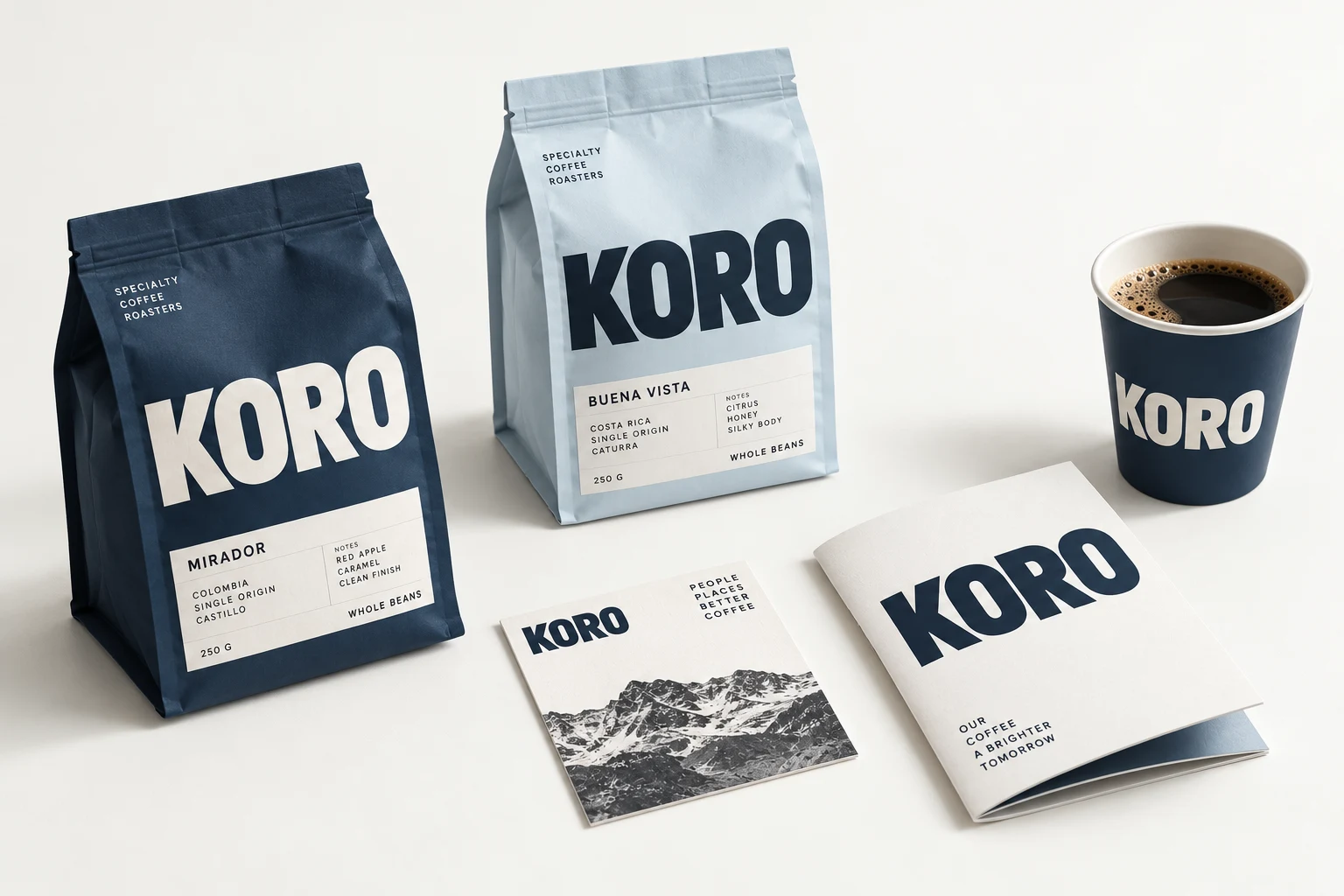
Cover; brand foundation; audience and promise; wordmark; clear space; color palette; typography; product imagery; social applications; digital applications; voice; handoff. Remove sections that do not apply.
Add your own product, story and approved assets. Treat preset colors and type as design starting points. Review the rules against actual packaging, screens and channels before calling them final.
Each guideline should answer a real question: which logo, which color, what scale, which image, what tone? Include enough examples to let the next person apply the system without guessing.
Start with brand foundation, audience, logo usage, clear space, color roles, typography, imagery, applications and tone of voice. Add examples and production notes. The template records your decisions; it does not supply research or approve a logo for commercial use.
The free previews are available now. Paid project delivery is planned and not available yet. Compare the planned $99 and $299 scopes.
The case-study PDFs are free to download. A custom finished 24-section brandbook belongs to a planned paid package, which is not open for orders. The free studio provides on-screen chapter previews and three watermarked layout downloads.
Yes. The structure can support product brands in beauty, fashion, food and home. Use the concept studies to understand different visual directions, then supply your own materials.
No. It records decisions. Research, differentiation and customer understanding must inform those decisions first.
This is the chapter structure in the downloadable VELA, KORO and SEREIN books. It expands on the 12-section working draft shown above.
| Section | What the reader needs to decide |
|---|---|
| 01 / Cover | Which brand and document version am I using? |
| 02 / How to use this book | Where do I find a rule, and which source file is authoritative? |
| 03 / Brand foundation | Who is the brand for, and what can it truthfully promise? |
| 04 / Voice and personality | How should the brand sound in a headline, product page or reply? |
| 05 / Product architecture | How do product names and variants fit into one family? |
| 06 / Master wordmark | Which exact wordmark should I place? |
| 07 / Logo variants | Which logo version works on this background? |
| 08 / Clear space and size | How much clear space and minimum size does the mark need? |
| 09 / Incorrect use | Which distortions and placements should I avoid? |
| 10 / Color system | What does each color do, and what are its exact values? |
| 11 / Accessible pairings | Which tested text/background pairings are suitable? |
| 12 / Typography | Which typefaces, weights and hierarchy should I use? |
| 13 / Layout grid | What margins, columns and spacing hold the layout together? |
| 14 / Graphic language | Which graphic elements belong to the identity? |
| 15 / Photography direction | What lighting, materials and framing suit product imagery? |
| 16 / Crop and composition | How can the same product image work in different crops? |
| 17 / Packaging architecture | How should information be arranged on a packaging concept? |
| 18 / Ecommerce application | How does the identity work on an ecommerce hero? |
| 19 / Social applications | How do the post and story layouts stay consistent? |
| 20 / Print touchpoints | How do the card and presentation layouts apply the system? |
| 21 / Partnerships | How should another brand or partner appear alongside this one? |
| 22 / Content and localization | What changes when copy or language changes? |
| 23 / Files and handoff | Which final files and editable sources are included? |
| 24 / Release and rights | Which rights and production approvals remain to be completed? |
Page count alone does not make a brandbook useful. For each rule, check whether the next designer can apply it to an actual product or channel. The six application sources demonstrate the rules in use.
Three free watermarked previews. Planned paid packages from $99; not open for orders. Explore planned packages.